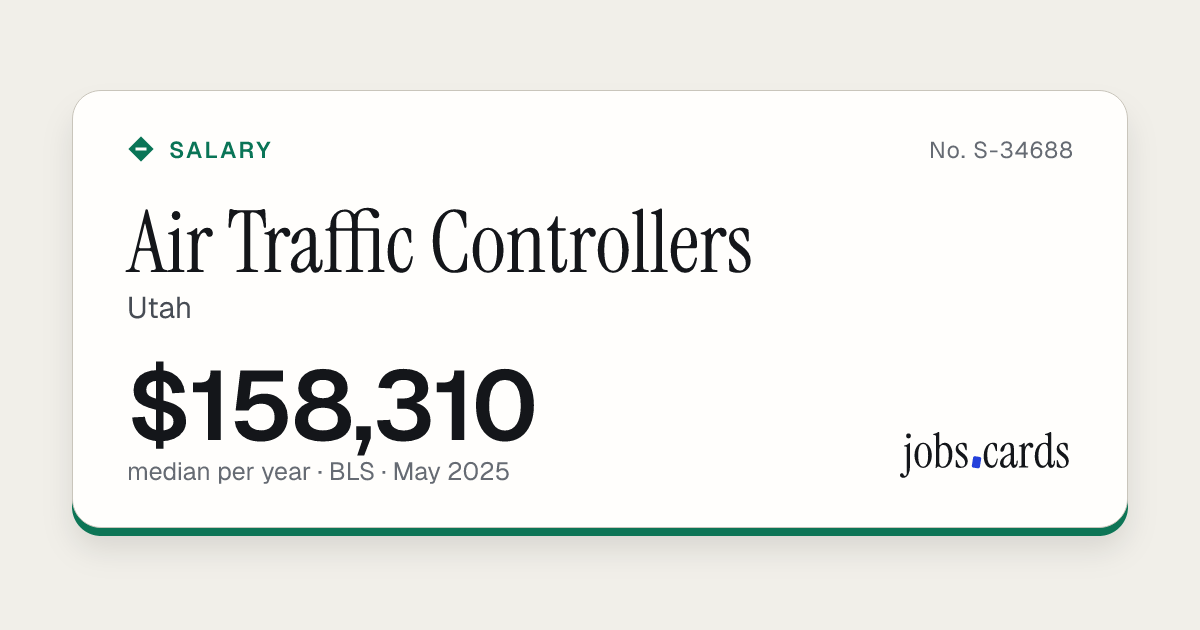
Control air traffic on and within vicinity of airport, and movement of air traffic between altitude sectors and control centers, according to established procedures and policies. Authorize, regulate, and control commercial airline flights according to government or company regulations to expedite and ensure flight safety.
Common job titles: ATCS (Air Traffic Control Specialist), Center ATC (Center Air Traffic Controller), Certified Professional Controller (CPC), Developmental Air Traffic Controller, Developmental ATCS (Developmental Air Traffic Control Specialist), Enroute ATCS (Enroute Air Traffic Control Specialist), Radar Air Traffic Controller, Terminal ATC Specialist (Terminal Air Traffic Control Specialist), Terminal Radar Approach Controller, Tower ATC (Tower Air Traffic Controller).
What the Work Involves
The five tasks that workers and experts surveyed by O*NET rate most important for this job, most important first.
- Inform pilots about nearby planes or potentially hazardous conditions, such as weather, speed and direction of wind, or visibility problems.
- Monitor aircraft within a specific airspace, using radar, computer equipment, or visual references.
- Monitor, direct, or sequence the movement of aircraft within an assigned air space or on the ground at airports to minimize delays and maximize safety.
- Alert airport emergency services in cases of emergency or when aircraft are experiencing difficulties.
- Maintain radio or telephone contact with adjacent control towers, terminal control units, or other area control centers to coordinate aircraft movement.
Education. 36% of workers surveyed by O*NET said the level required for this job is: High School Diploma or the equivalent.
Preparation This Job Usually Needs
Job Zone Three: Medium Preparation Needed. Most occupations in this zone require training in vocational schools, related on-the-job experience, or an associate's degree. Employees in these occupations usually need one or two years of training involving both on-the-job experience and informal training with experienced workers. A recognized apprenticeship program may be associated with these occupations. Previous work-related skill, knowledge, or experience is required for these occupations. For example, an electrician must have completed three or four years of apprenticeship or several years of vocational training, and often must have passed a licensing exam, in order to perform the job.
This page includes information from the O*NET 31.0 Database by the U.S. Department of Labor, Employment and Training Administration (USDOL/ETA). Used under the CC BY 4.0 license. O*NET® is a trademark of USDOL/ETA.