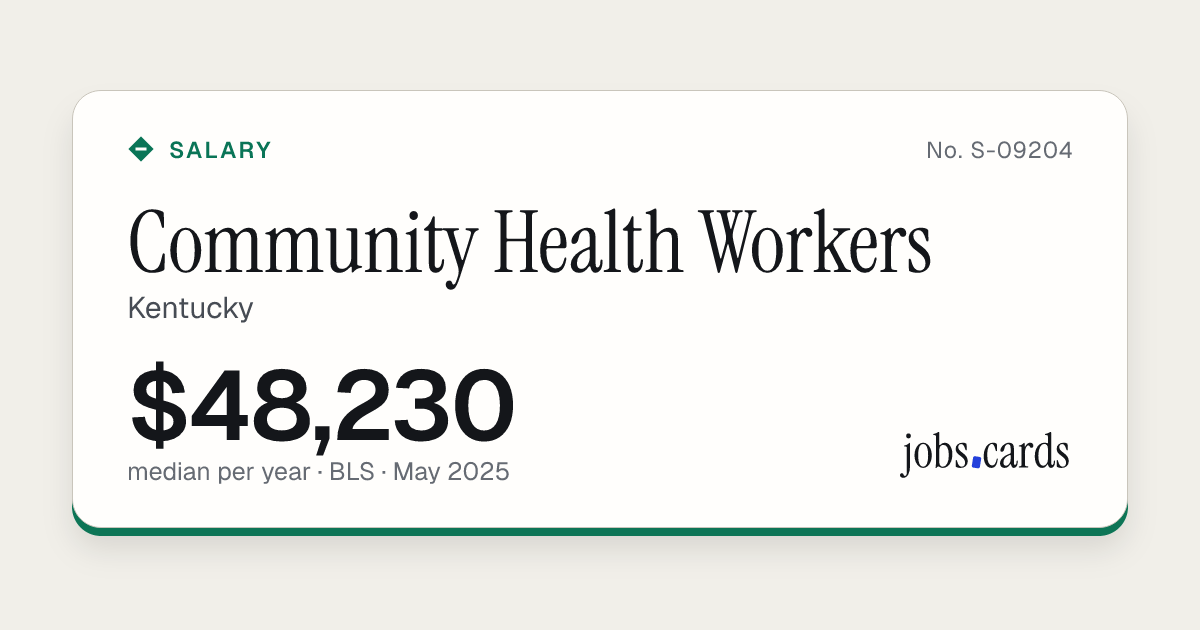
Promote health within a community by assisting individuals to adopt healthy behaviors. Serve as an advocate for the health needs of individuals by assisting community residents in effectively communicating with healthcare providers or social service agencies. Act as liaison or advocate and implement programs that promote, maintain, and improve individual and overall community health. May deliver health-related preventive services such as blood pressure, glaucoma, and hearing screenings. May collect data to help identify community health needs.
Common job titles: Communicable Disease Liaison, Community Health Coordinator, Community Health Outreach Worker, Community Health Program Coordinator, Community Health Program Representative (Community Health Program Rep), Community Health Promoter, Community HIV Education Specialist (Community Human Immunodeficiency Virus Education Specialist), Community Navigator, Community Nutrition Educator, Health Program Specialist.
What the Work Involves
The five tasks that workers and experts surveyed by O*NET rate most important for this job, most important first.
- Report incidences of child or elder abuse, neglect, or threats of harm to authorities, as required.
- Monitor nutrition of children, elderly, or other high-risk groups.
- Maintain updated client records with plans, notes, appropriate forms, or related information.
- Contact clients in person, by phone, or in writing to ensure they have completed required or recommended actions.
- Perform basic diagnostic procedures, such as blood pressure screening, breast cancer screening, or communicable disease screening.
Education. 56% of workers surveyed by O*NET said the level required for this job is: Bachelor's Degree.
Preparation This Job Usually Needs
Job Zone Four: Considerable Preparation Needed. Most of these occupations require a four-year bachelor's degree, but some do not. Employees in these occupations usually need several years of work-related experience, on-the-job training, and/or vocational training. A considerable amount of work-related skill, knowledge, or experience is needed for these occupations. For example, an accountant must complete four years of college and work for several years in accounting to be considered qualified.
This page includes information from the O*NET 31.0 Database by the U.S. Department of Labor, Employment and Training Administration (USDOL/ETA). Used under the CC BY 4.0 license. O*NET® is a trademark of USDOL/ETA.