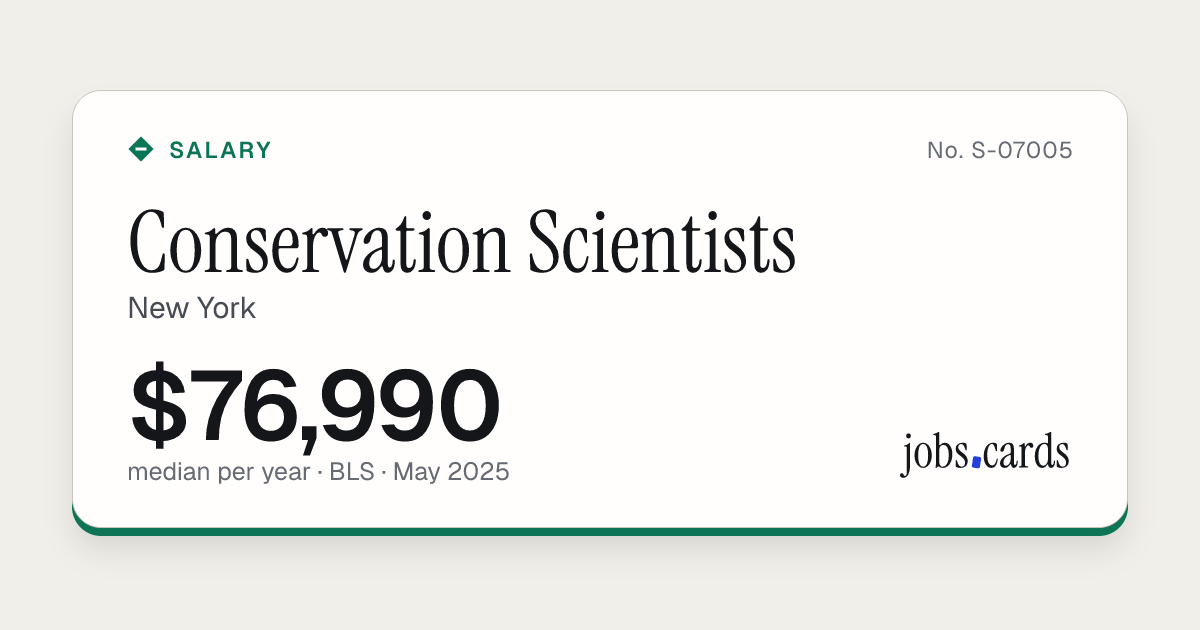
Manage, improve, and protect natural resources to maximize their use without damaging the environment. May conduct soil surveys and develop plans to eliminate soil erosion or to protect rangelands. May instruct farmers, agricultural production managers, or ranchers in best ways to use crop rotation, contour plowing, or terracing to conserve soil and water; in the number and kind of livestock and forage plants best suited to particular ranges; and in range and farm improvements, such as fencing and reservoirs for stock watering.
Common job titles: Conservationist, Environmental Analyst, Environmental Quality Scientist, Erosion Control Specialist, Land Reclamation Specialist, Land Resource Specialist, Research Soil Scientist, Resource Conservation Specialist, Resource Conservationist, Soil Conservationist.
What the Work Involves
The five tasks that workers and experts surveyed by O*NET rate most important for this job, most important first.
- Apply principles of specialized fields of science, such as agronomy, soil science, forestry, or agriculture, to achieve conservation objectives.
- Plan soil management or conservation practices, such as crop rotation, reforestation, permanent vegetation, contour plowing, or terracing, to maintain soil or conserve water.
- Monitor projects during or after construction to ensure projects conform to design specifications.
- Implement soil or water management techniques, such as nutrient management, erosion control, buffers, or filter strips, in accordance with conservation plans.
- Advise land users, such as farmers or ranchers, on plans, problems, or alternative conservation solutions.
Education. 70% of workers surveyed by O*NET said the level required for this job is: Bachelor's Degree.
Preparation This Job Usually Needs
Job Zone Four: Considerable Preparation Needed. Most of these occupations require a four-year bachelor's degree, but some do not. Employees in these occupations usually need several years of work-related experience, on-the-job training, and/or vocational training. A considerable amount of work-related skill, knowledge, or experience is needed for these occupations. For example, an accountant must complete four years of college and work for several years in accounting to be considered qualified.
This page includes information from the O*NET 31.0 Database by the U.S. Department of Labor, Employment and Training Administration (USDOL/ETA). Used under the CC BY 4.0 license. O*NET® is a trademark of USDOL/ETA.