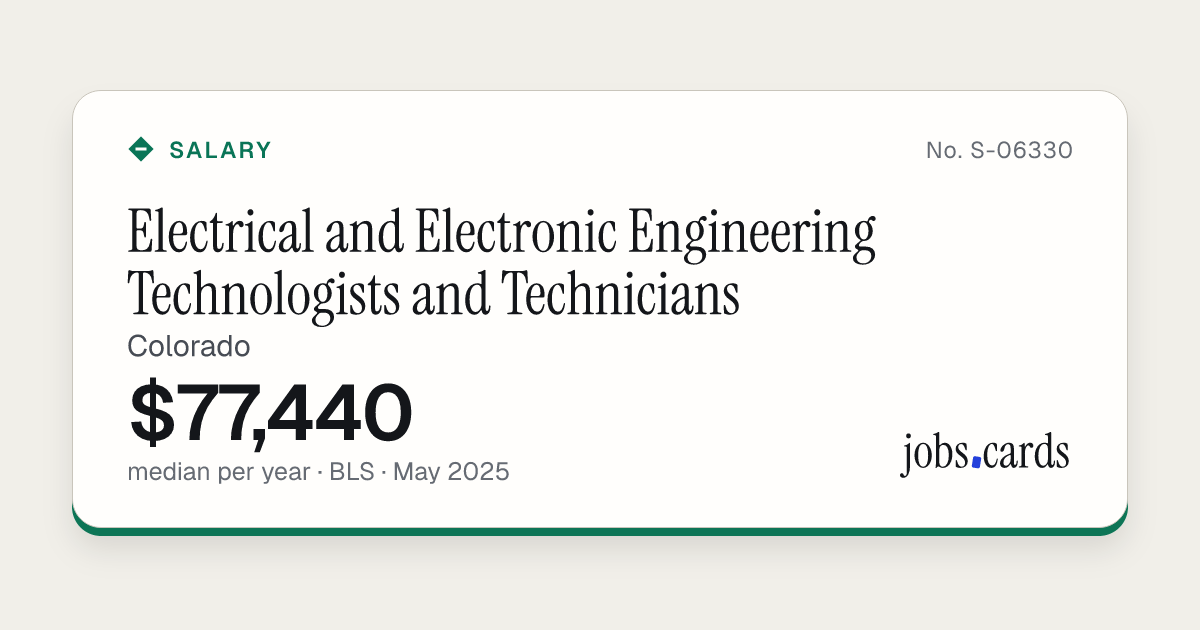
Apply electrical and electronic theory and related knowledge, usually under the direction of engineering staff, to design, build, repair, adjust, and modify electrical components, circuitry, controls, and machinery for subsequent evaluation and use by engineering staff in making engineering design decisions.
Common job titles: Communication Technician (Communication Tech), Communications Technologist, Electrical Engineering Technician (Electrical Engineering Tech), Electrical Technician (Electrical Tech), Electronic Engineering Technician (Electronic Engineering Tech), Electronic Technician (Electronic Tech), Electronics Engineering Technician, Electronics Technician, Relay Technician (Relay Tech), System Technologist.
What the Work Involves
The five tasks that workers and experts surveyed by O*NET rate most important for this job, most important first.
- Install or maintain electrical control systems, industrial automation systems, or electrical equipment, including control circuits, variable speed drives, or programmable logic controllers.
- Review electrical engineering plans to ensure adherence to design specifications and compliance with applicable electrical codes and standards.
- Read blueprints, wiring diagrams, schematic drawings, or engineering instructions for assembling electronics units, applying knowledge of electronic theory and components.
- Specify, coordinate, or conduct quality control or quality assurance programs or procedures.
- Assemble, test, or maintain circuitry or electronic components, according to engineering instructions, technical manuals, or knowledge of electronics, using hand or power tools.
Education. 34% of workers surveyed by O*NET said the level required for this job is: Associate's Degree or other 2-year degree.
Preparation This Job Usually Needs
Job Zone Three: Medium Preparation Needed. Most occupations in this zone require training in vocational schools, related on-the-job experience, or an associate's degree. Employees in these occupations usually need one or two years of training involving both on-the-job experience and informal training with experienced workers. A recognized apprenticeship program may be associated with these occupations. Previous work-related skill, knowledge, or experience is required for these occupations. For example, an electrician must have completed three or four years of apprenticeship or several years of vocational training, and often must have passed a licensing exam, in order to perform the job.
This page includes information from the O*NET 31.0 Database by the U.S. Department of Labor, Employment and Training Administration (USDOL/ETA). Used under the CC BY 4.0 license. O*NET® is a trademark of USDOL/ETA.