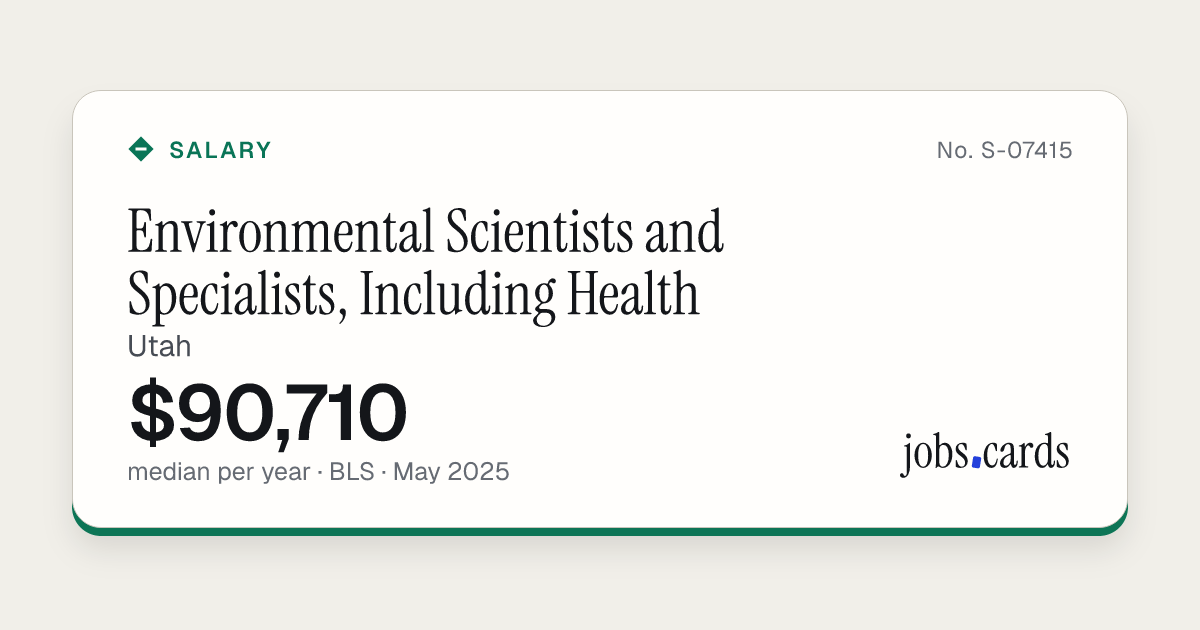
Conduct research or perform investigation for the purpose of identifying, abating, or eliminating sources of pollutants or hazards that affect either the environment or public health. Using knowledge of various scientific disciplines, may collect, synthesize, study, report, and recommend action based on data derived from measurements or observations of air, food, soil, water, and other sources.
Common job titles: Environmental Analyst, Environmental Health and Safety Specialist (EHS Specialist), Environmental Health Specialist, Environmental Programs Specialist, Environmental Protection Specialist, Environmental Scientist, Environmental Specialist, Hazardous Substances Scientist, Natural Resources Specialist, Registered Environmental Health Specialist (REHS).
What the Work Involves
The five tasks that workers and experts surveyed by O*NET rate most important for this job, most important first.
- Communicate scientific or technical information to the public, organizations, or internal audiences through oral briefings, written documents, workshops, conferences, training sessions, or public hearings.
- Monitor effects of pollution or land degradation and recommend means of prevention or control.
- Collect, synthesize, analyze, manage, and report environmental data, such as pollution emission measurements, atmospheric monitoring measurements, meteorological or mineralogical information, or soil or water samples.
- Review and implement environmental technical standards, guidelines, policies, and formal regulations that meet all appropriate requirements.
- Provide scientific or technical guidance, support, coordination, or oversight to governmental agencies, environmental programs, industry, or the public.
Education. 47% of workers surveyed by O*NET said the level required for this job is: Bachelor's Degree.
Preparation This Job Usually Needs
Job Zone Four: Considerable Preparation Needed. Most of these occupations require a four-year bachelor's degree, but some do not. Employees in these occupations usually need several years of work-related experience, on-the-job training, and/or vocational training. A considerable amount of work-related skill, knowledge, or experience is needed for these occupations. For example, an accountant must complete four years of college and work for several years in accounting to be considered qualified.
This page includes information from the O*NET 31.0 Database by the U.S. Department of Labor, Employment and Training Administration (USDOL/ETA). Used under the CC BY 4.0 license. O*NET® is a trademark of USDOL/ETA.