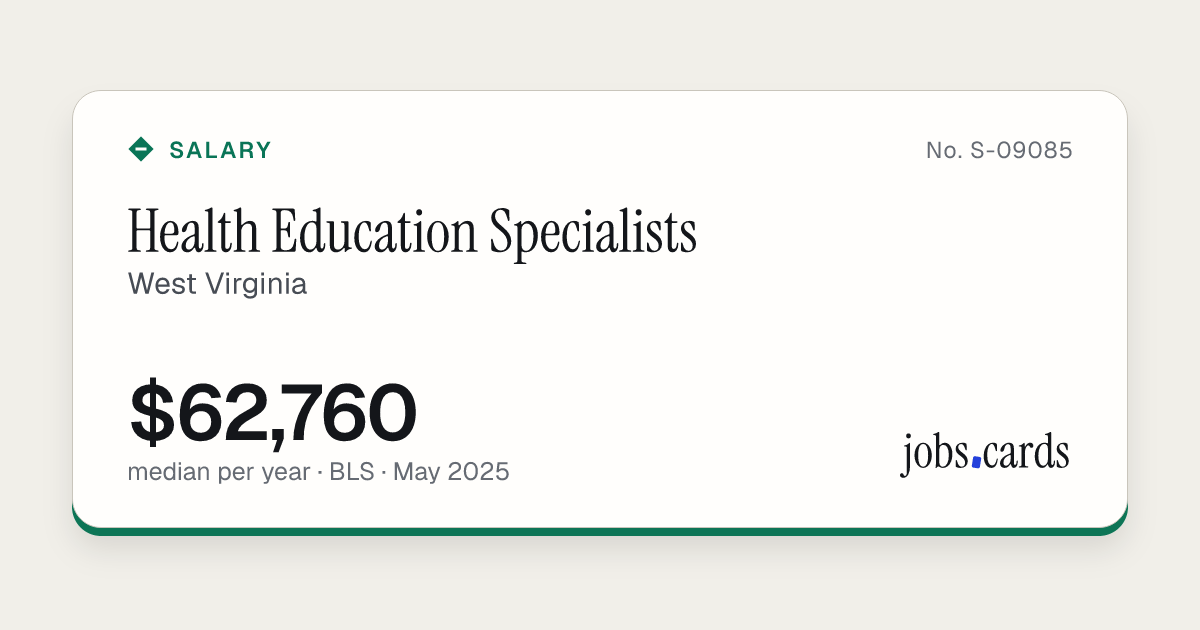
Provide and manage health education programs that help individuals, families, and their communities maximize and maintain healthy lifestyles. Use data to identify community needs prior to planning, implementing, monitoring, and evaluating programs designed to encourage healthy lifestyles, policies, and environments. May link health systems, health providers, insurers, and patients to address individual and population health needs. May serve as resource to assist individuals, other health professionals, or the community, and may administer fiscal resources for health education programs.
Common job titles: Certified Diabetes Educator, Clinical Instructor, Community Health Consultant, Education Coordinator, Health Education Coordinator, Health Education Specialist, Health Educator, Health Promotion Specialist, Public Health Educator, Public Information Officer.
What the Work Involves
The five tasks that workers and experts surveyed by O*NET rate most important for this job, most important first.
- Prepare and distribute health education materials, such as reports, bulletins, and visual aids, to address smoking, vaccines, and other public health concerns.
- Develop and maintain cooperative working relationships with agencies and organizations interested in public health care.
- Maintain databases, mailing lists, telephone networks, and other information to facilitate the functioning of health education programs.
- Document activities and record information, such as the numbers of applications completed, presentations conducted, and persons assisted.
- Develop and present health education and promotion programs, such as training workshops, conferences, and school or community presentations.
Education. 62% of workers surveyed by O*NET said the level required for this job is: Associate's Degree or other 2-year degree.
Preparation This Job Usually Needs
Job Zone Four: Considerable Preparation Needed. Most of these occupations require a four-year bachelor's degree, but some do not. Employees in these occupations usually need several years of work-related experience, on-the-job training, and/or vocational training. A considerable amount of work-related skill, knowledge, or experience is needed for these occupations. For example, an accountant must complete four years of college and work for several years in accounting to be considered qualified.
This page includes information from the O*NET 31.0 Database by the U.S. Department of Labor, Employment and Training Administration (USDOL/ETA). Used under the CC BY 4.0 license. O*NET® is a trademark of USDOL/ETA.