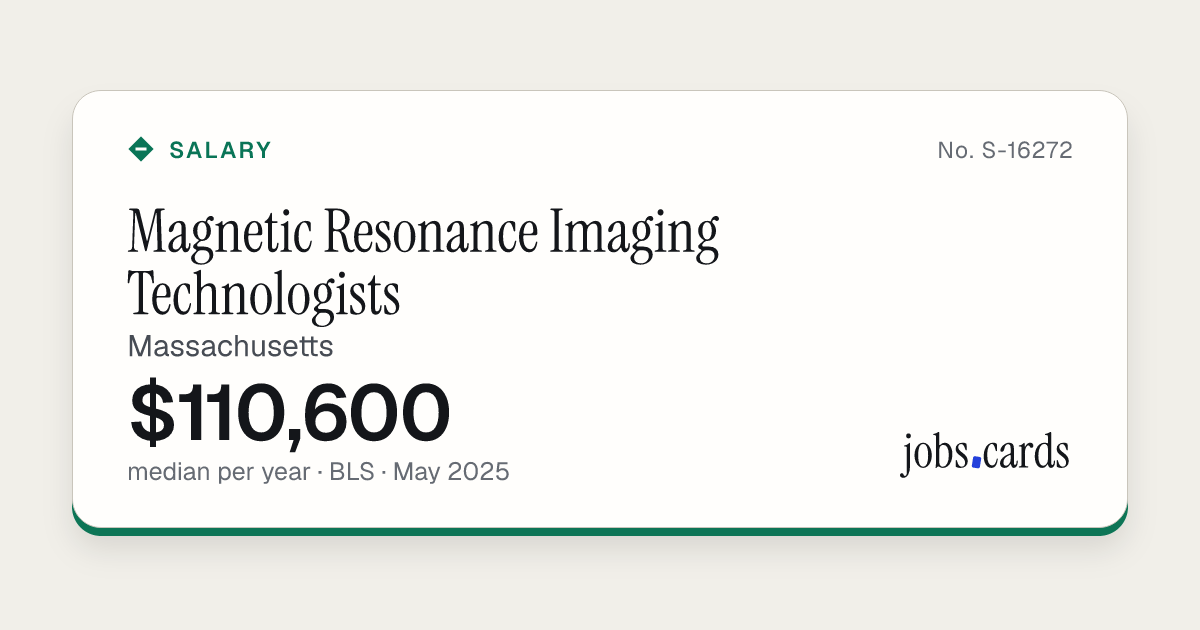
Operate Magnetic Resonance Imaging (MRI) scanners. Monitor patient safety and comfort, and view images of area being scanned to ensure quality of pictures. May administer gadolinium contrast dosage intravenously. May interview patient, explain MRI procedures, and position patient on examining table. May enter into the computer data such as patient history, anatomical area to be scanned, orientation specified, and position of entry.
Common job titles: MRI Coordinator (Magnetic Resonance Imaging Coordinator), MRI QA Coordinator (Magnetic Resonance Imaging Quality Assurance Coordinator), MRI Radiographer (Magnetic Resonance Imaging Radiographer), MRI Specialist (Magnetic Resonance Imaging Specialist), MRI Tech (Magnetic Resonance Imaging Technician), MRI Technologist (Magnetic Resonance Imaging Technologist), Research MRI Technologist (Research Magnetic Resonance Imaging Technologist).
What the Work Involves
The five tasks that workers and experts surveyed by O*NET rate most important for this job, most important first.
- Conduct screening interviews of patients to identify contraindications, such as ferrous objects, pregnancy, prosthetic heart valves, cardiac pacemakers, or tattoos.
- Review physicians' orders to confirm prescribed exams.
- Select appropriate imaging techniques or coils to produce required images.
- Operate magnetic resonance imaging (MRI) scanners.
- Provide headphones or earplugs to patients to improve comfort and reduce unpleasant noise.
Education. 65% of workers surveyed by O*NET said the level required for this job is: Associate's Degree or other 2-year degree.
Preparation This Job Usually Needs
Job Zone Three: Medium Preparation Needed. Most occupations in this zone require training in vocational schools, related on-the-job experience, or an associate's degree. Employees in these occupations usually need one or two years of training involving both on-the-job experience and informal training with experienced workers. A recognized apprenticeship program may be associated with these occupations. Previous work-related skill, knowledge, or experience is required for these occupations. For example, an electrician must have completed three or four years of apprenticeship or several years of vocational training, and often must have passed a licensing exam, in order to perform the job.
This page includes information from the O*NET 31.0 Database by the U.S. Department of Labor, Employment and Training Administration (USDOL/ETA). Used under the CC BY 4.0 license. O*NET® is a trademark of USDOL/ETA.