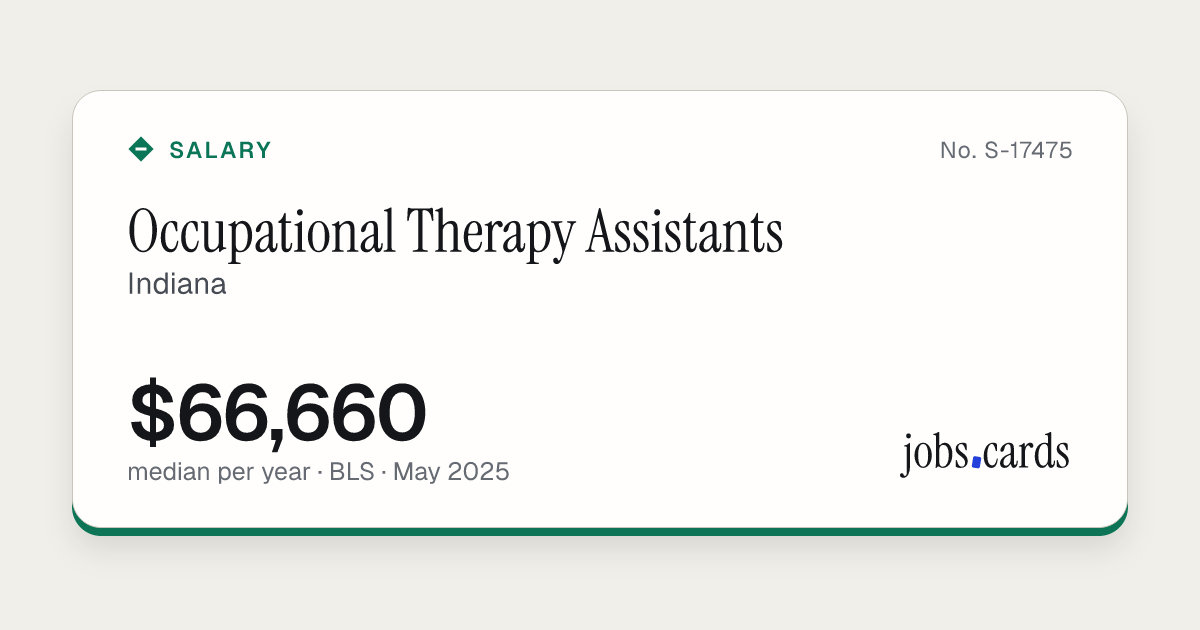
Assist occupational therapists in providing occupational therapy treatments and procedures. May, in accordance with state laws, assist in development of treatment plans, carry out routine functions, direct activity programs, and document the progress of treatments. Generally requires formal training.
Common job titles: Acute Care Occupational Therapy Assistant (Acute Care OT Assistant), Certified Occupational Assistant, Certified Occupational Therapist Assistant (COTA), Certified Occupational Therapy Assistant (COTA), Licensed Occupational Therapist Assistant (LOTA), Licensed Occupational Therapy Assistant (LOTA), Occupational Therapist Assistant (OTA), Occupational Therapy Assistant (OTA), Registered Therapist Assistant, School Based Certified Occupational Therapy Assistant (School Based COTA).
What the Work Involves
The five tasks that workers and experts surveyed by O*NET rate most important for this job, most important first.
- Instruct, or assist in instructing, patients and families in home programs, basic living skills, or the care and use of adaptive equipment.
- Maintain and promote a positive attitude toward clients and their treatment programs.
- Implement, or assist occupational therapists with implementing, treatment plans designed to help clients function independently.
- Report to supervisors, verbally or in writing, on patients' progress, attitudes, and behavior.
- Monitor patients' performance in therapy activities, providing encouragement.
Education. 92% of workers surveyed by O*NET said the level required for this job is: Associate's Degree or other 2-year degree.
Preparation This Job Usually Needs
Job Zone Three: Medium Preparation Needed. Most occupations in this zone require training in vocational schools, related on-the-job experience, or an associate's degree. Employees in these occupations usually need one or two years of training involving both on-the-job experience and informal training with experienced workers. A recognized apprenticeship program may be associated with these occupations. Previous work-related skill, knowledge, or experience is required for these occupations. For example, an electrician must have completed three or four years of apprenticeship or several years of vocational training, and often must have passed a licensing exam, in order to perform the job.
This page includes information from the O*NET 31.0 Database by the U.S. Department of Labor, Employment and Training Administration (USDOL/ETA). Used under the CC BY 4.0 license. O*NET® is a trademark of USDOL/ETA.