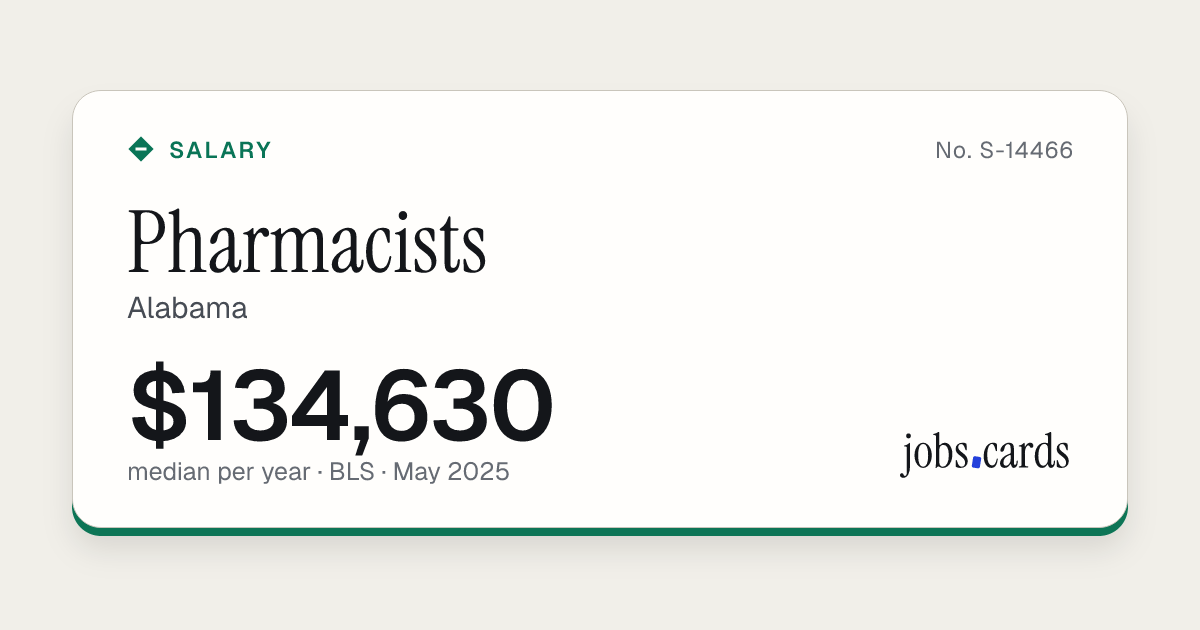
Dispense drugs prescribed by physicians and other health practitioners and provide information to patients about medications and their use. May advise physicians and other health practitioners on the selection, dosage, interactions, and side effects of medications.
Common job titles: Clinical Pharmacist, Clinical Pharmacy Specialist (CPS), Community Pharmacist, Hospital Pharmacist, Inpatient Pharmacist, Pharm D (Pharmacy Doctor), Pharmacy Informaticist, Pharmacy Services Clinical Coordinator, Registered Pharmacist, Retail Pharmacist.
What the Work Involves
The five tasks that workers and experts surveyed by O*NET rate most important for this job, most important first.
- Review prescriptions to assure accuracy, to ascertain the needed ingredients, and to evaluate their suitability.
- Collaborate with other health care professionals to plan, monitor, review, or evaluate the quality or effectiveness of drugs or drug regimens, providing advice on drug applications or characteristics.
- Work in hospitals or clinics or for Health Management Organizations (HMOs), dispensing prescriptions, serving as a medical team consultant, or specializing in specific drug therapy areas, such as oncology or nuclear pharmacotherapy.
- Provide information and advice regarding drug interactions, side effects, dosage, and proper medication storage.
- Provide specialized services to help patients manage conditions, such as diabetes, asthma, smoking cessation, or high blood pressure.
Education. 78% of workers surveyed by O*NET said the level required for this job is: Doctoral Degree.
Preparation This Job Usually Needs
Job Zone Five: Extensive Preparation Needed. Most of these occupations require graduate school. For example, they may require a master's degree, and some require a Ph.D., M.D., or J.D. (law degree). Employees may need some on-the-job training, but most of these occupations assume that the person will already have the required skills, knowledge, work-related experience, and/or training. Extensive skill, knowledge, and experience are needed for these occupations. Many require more than five years of experience. For example, surgeons must complete four years of college and an additional five to seven years of specialized medical training to be able to do their job.
This page includes information from the O*NET 31.0 Database by the U.S. Department of Labor, Employment and Training Administration (USDOL/ETA). Used under the CC BY 4.0 license. O*NET® is a trademark of USDOL/ETA.