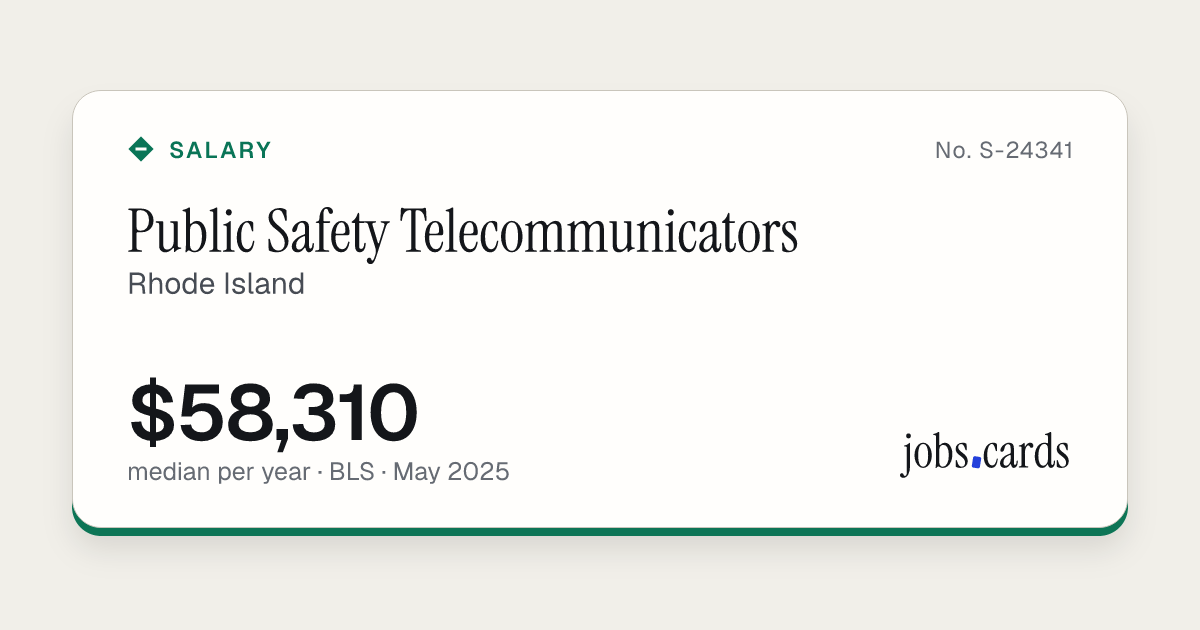
Operate telephone, radio, or other communication systems to receive and communicate requests for emergency assistance at 9-1-1 public safety answering points and emergency operations centers. Take information from the public and other sources regarding crimes, threats, disturbances, acts of terrorism, fires, medical emergencies, and other public safety matters. May coordinate and provide information to law enforcement and emergency response personnel. May access sensitive databases and other information sources as needed. May provide additional instructions to callers based on knowledge of and certification in law enforcement, fire, or emergency medical procedures.
Common job titles: 911 Dispatcher, Communications Officer, Communications Operator, Communications Specialist, Emergency Communications Dispatcher, Emergency Communications Operator (ECO), Police Dispatcher, Public Safety Dispatcher, Telecommunicator.
What the Work Involves
The five tasks that workers and experts surveyed by O*NET rate most important for this job, most important first.
- Provide emergency medical instructions to callers.
- Question callers to determine their locations and the nature of their problems to determine type of response needed.
- Determine response requirements and relative priorities of situations, and dispatch units in accordance with established procedures.
- Receive incoming telephone or alarm system calls regarding emergency and non-emergency police and fire service, emergency ambulance service, information, and after-hours calls for departments within a city.
- Relay information and messages to and from emergency sites, to law enforcement agencies, and to all other individuals or groups requiring notification.
Education. 63% of workers surveyed by O*NET said the level required for this job is: High School Diploma or the equivalent.
Preparation This Job Usually Needs
Job Zone 1-2: Very Little to Some Preparation Needed. Usually requires a high school diploma or GED, though some occupations may not. Ranges from a few days to one year of on-the-job training. Some occupations may need little or no previous experience; others require several months to a year of experience. For example, landscaping and groundskeeping workers might require very little training or previous experience, while agricultural equipment operators can benefit from on-the job training.
This page includes information from the O*NET 31.0 Database by the U.S. Department of Labor, Employment and Training Administration (USDOL/ETA). Used under the CC BY 4.0 license. O*NET® is a trademark of USDOL/ETA.