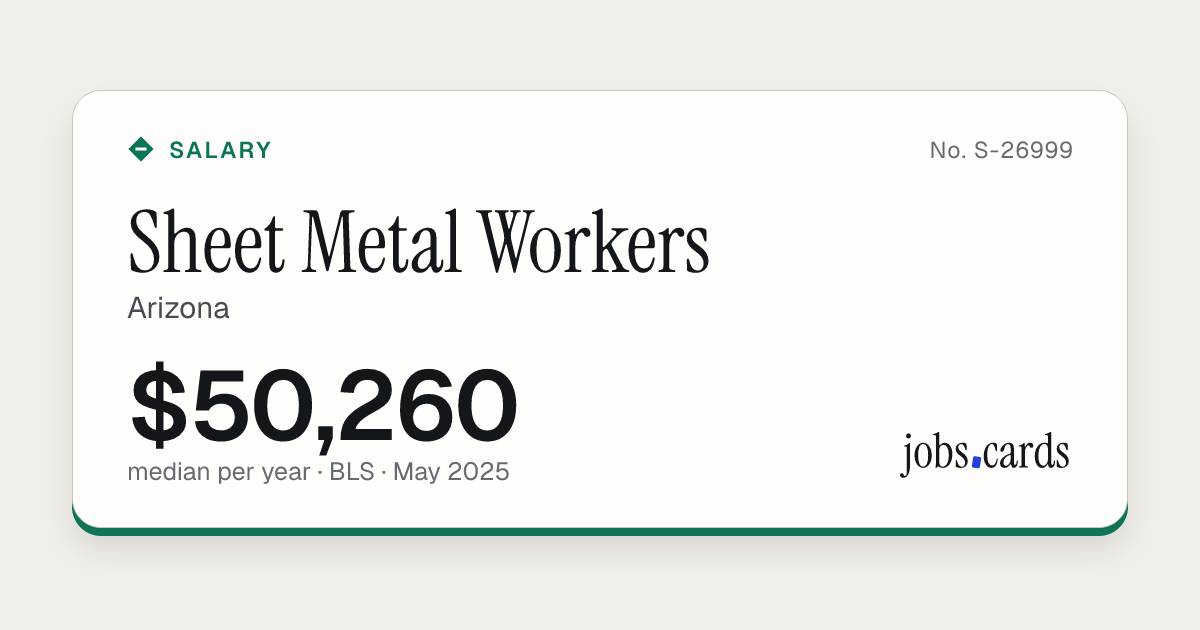
Fabricate, assemble, install, and repair sheet metal products and equipment, such as ducts, control boxes, drainpipes, and furnace casings. Work may involve any of the following: setting up and operating fabricating machines to cut, bend, and straighten sheet metal; shaping metal over anvils, blocks, or forms using hammer; operating soldering and welding equipment to join sheet metal parts; or inspecting, assembling, and smoothing seams and joints of burred surfaces. Includes sheet metal duct installers who install prefabricated sheet metal ducts used for heating, air conditioning, or other purposes.
Common job titles: Commercial Sheet Metal Service Installer, Field Installer, HVAC Sheet Metal Installer (Heating, Ventilation, and Air Conditioning Sheet Metal Installer), HVAC Sheet Metal Specialist (Heating, Ventilation, and Air Conditioning Sheet Metal Specialist), Sheet Metal Fabricator, Sheet Metal Installer, Sheet Metal Journeyman, Sheet Metal Layout Mechanic, Sheet Metal Mechanic, Sheet Metal Worker.
What the Work Involves
The five tasks that workers and experts surveyed by O*NET rate most important for this job, most important first.
- Inspect individual parts, assemblies, or installations, using measuring instruments, such as calipers, scales, or micrometers.
- Maintain equipment, making repairs or modifications when necessary.
- Fabricate ducts for high efficiency heating, ventilating, and air conditioning (HVAC) systems to maximize efficiency of systems.
- Fasten seams or joints together with welds, bolts, cement, rivets, solder, caulks, metal drive clips, or bonds to assemble components into products or to repair sheet metal items.
- Transport prefabricated parts to construction sites for assembly and installation.
Education. 49% of workers surveyed by O*NET said the level required for this job is: High School Diploma or the equivalent.
Preparation This Job Usually Needs
Job Zone 1-2: Very Little to Some Preparation Needed. Usually requires a high school diploma or GED, though some occupations may not. Ranges from a few days to one year of on-the-job training. Some occupations may need little or no previous experience; others require several months to a year of experience. For example, landscaping and groundskeeping workers might require very little training or previous experience, while agricultural equipment operators can benefit from on-the job training.
This page includes information from the O*NET 31.0 Database by the U.S. Department of Labor, Employment and Training Administration (USDOL/ETA). Used under the CC BY 4.0 license. O*NET® is a trademark of USDOL/ETA.